
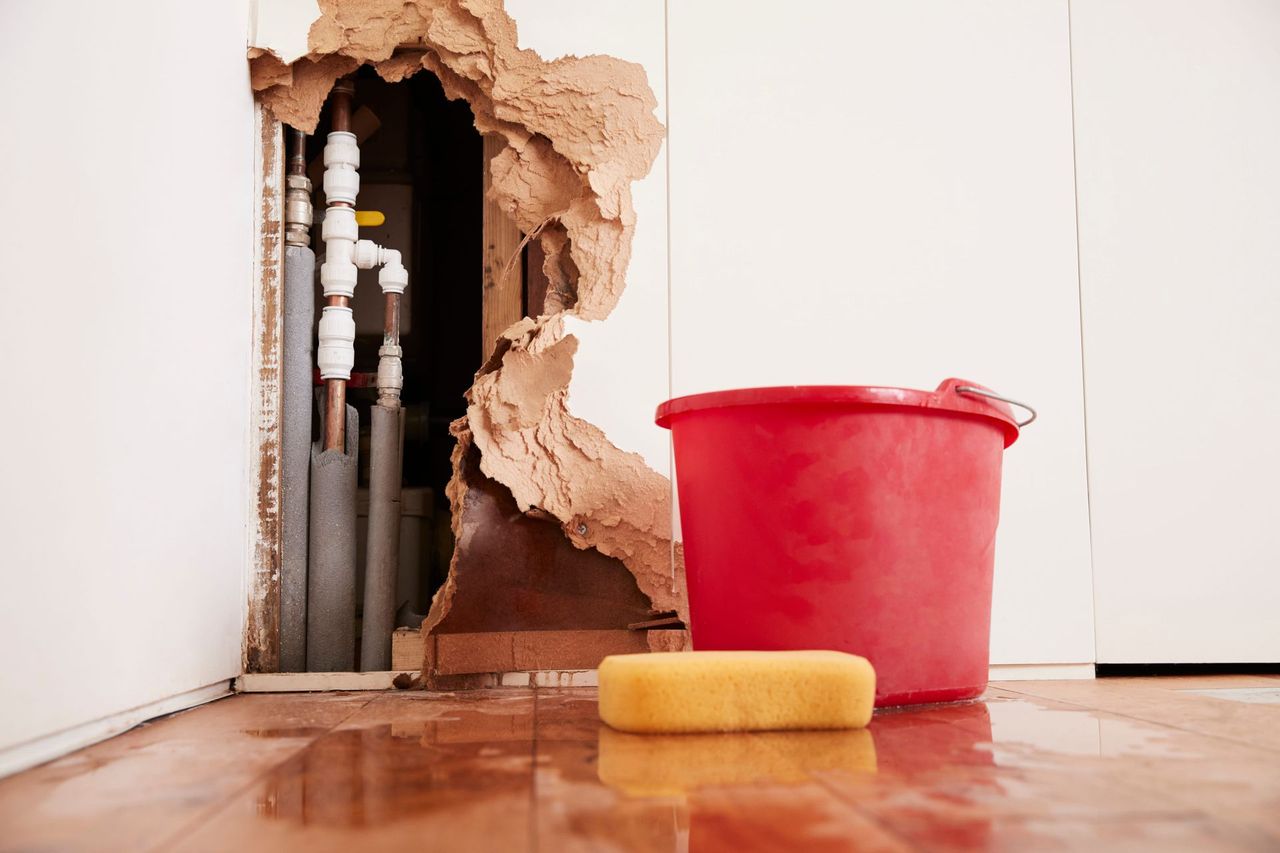
The call we get most often starts the same way: a supply line let go overnight, the homeowner shut the water off, and now they are waiting for their insurance company to tell them it is okay to do something. That wait is usually 24 to 72 hours. In a wet house, 24 to 72 hours is the difference between drying a floor and rebuilding one.
Here is the part most people are never told: your policy does not ask you to wait. It asks the opposite.
Your policy has a duty to mitigate
Nearly every homeowner and commercial property policy contains a clause under the insured's duties after a loss requiring you to take reasonable steps to protect the property from further damage. Language varies by carrier, but the intent does not: stop the loss from getting bigger. Reasonable emergency mitigation is generally a covered expense, and carriers expect it to begin before anyone has walked your property.
The risk runs the other direction. Damage that only happened because a wet building sat wet for three days can be argued as damage you failed to prevent. We have seen mold claims denied on exactly that basis.
You need approval to rebuild. You do not need approval to stop the damage. Those are two different phases of the same claim, and only one of them is time-critical.
What three days of waiting actually costs
Water does not sit still. It moves down through subfloor, sideways along joists, and up into drywall by capillary action. Meanwhile the room's humidity climbs, and every porous material in it starts absorbing.
- Hours 0–24. Category 1 clean water. Most hardwood, drywall and insulation can still be dried in place if air movement and dehumidification start now.
- Hours 24–48. Microbial growth becomes likely on wet cellulose. Water degrades toward Category 2. Cabinet bases and engineered flooring begin to swell and delaminate.
- Day 3 and beyond. Drying becomes demolition. Flooring, trim, drywall and insulation come out. A mitigation job turns into a reconstruction job, and the claim doubles or worse.
None of that is theoretical. It is the same house on day one and day four, and the only variable is how long the water was allowed to work.
What your carrier actually wants
Adjusters are not opposed to fast mitigation. What they push back on is mitigation nobody can verify. Their file needs to show what was wet, how wet, what was done about it, and why. That is documentation work, and it is our job, not yours.
- Moisture readings on every affected material, mapped room by room, before anything is touched.
- Photo documentation of the source, the affected area and the equipment placed.
- Daily drying logs showing readings trending down toward a documented dry standard.
- A written scope tied to industry standards, so line items are not a matter of opinion.
A claim supported that way tends to move quickly. A claim with a shoebox of phone photos and an invoice does not.
Emergency mitigation is the one part of the claim that cannot be scheduled. Everything after it can.
What to do in the first hour
Stop the source. Main shutoff for supply failures, breaker for anything near electrical. If the water is coming through the roof, do not go up there in weather.
Photograph before you move anything. Wide shots of each room, then close-ups of the source and the worst areas. Thirty seconds of video walking the space is worth more than you would think.
Call a restoration contractor. Not a plumber for the drying, not a carpet cleaner for the structure. You want moisture meters on site, today.
Then open the claim. Report the loss, get a claim number, and tell them mitigation is already underway. That sentence is normal and expected.
How Apex handles the insurance side
We are on site within two to four hours, day or night, anywhere in Genesee County and Metro Detroit. Equipment goes in, readings get taken, and the file starts building itself from the first hour. From there we coordinate directly with your adjuster: scope, photo reports, drying logs, and the reconstruction estimate when the structure is dry.
You are not the middleman in that conversation. You approve the work, we document it, and the carrier gets what it needs to pay the claim. Simple. Streamlined. Stress free.
No call centers. No waiting. No nonsense. We dispatch 24/7.