
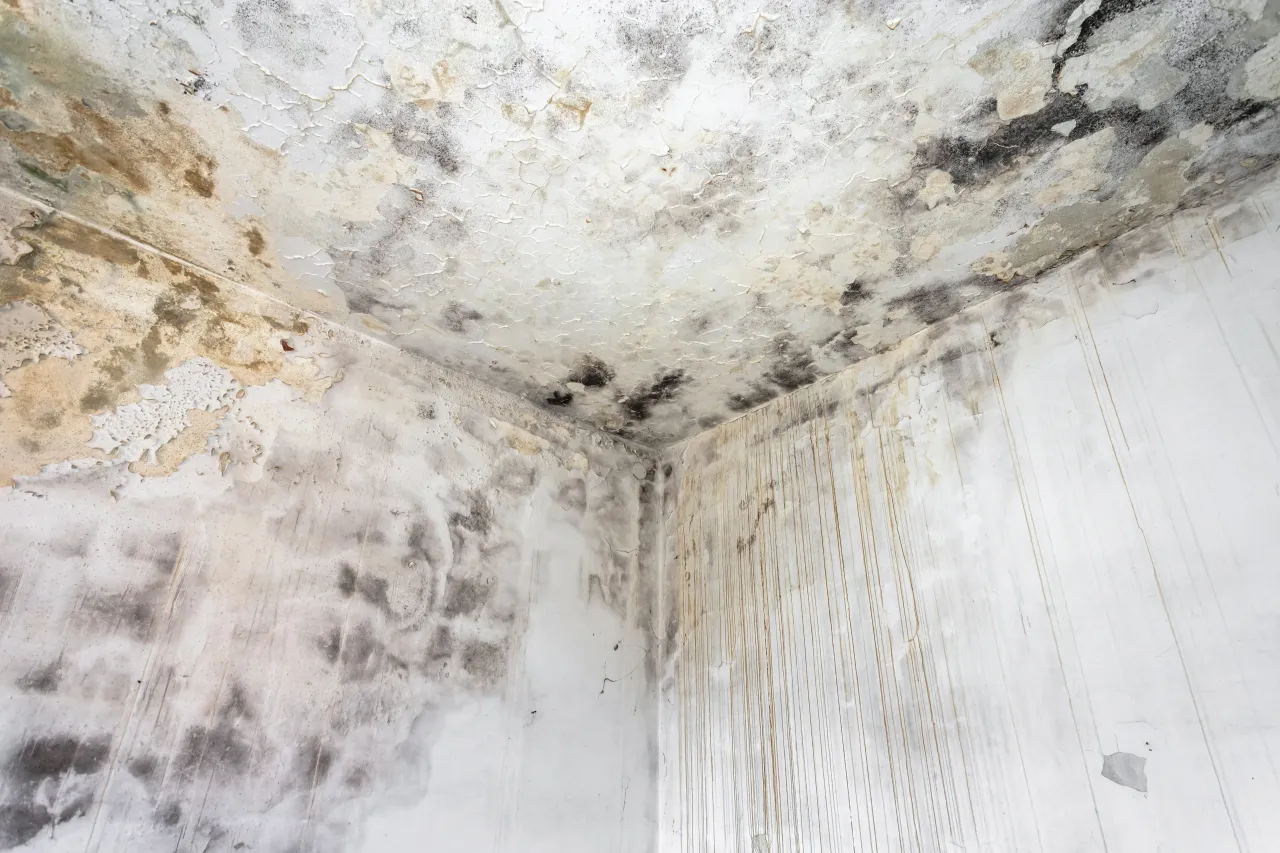
The number gets repeated so often that it has stopped meaning anything: mold grows in 24 to 48 hours. True, with conditions attached. Understanding those conditions is what tells you whether the damp spot in your basement is a drying problem or a remediation problem.
What the window actually describes
Mold spores are already in your house. They are in the air, in the dust, in the carpet. They are inert until they get water. Give a spore a wet cellulose surface — paper-faced drywall, framing lumber, cardboard, carpet backing — at a comfortable room temperature, and germination can begin inside a day. Visible colonies typically follow in two to five days.
The trigger is not standing water. It is material moisture content and the humidity of the air around it. A wall cavity that reads 30 percent moisture content behind intact paint is growing mold whether or not you can see a drop of water.
- Moisture. Sustained relative humidity above roughly 60 percent, or wet material.
- Food. Anything organic. Drywall paper is nearly ideal; so is the dust on a joist.
- Time. Remove the moisture inside the window and growth never starts. That is the whole strategy.
Why Michigan basements are the usual suspect
Basements here run cool, and cool surfaces pull moisture out of warm summer air. In July a Grand Blanc basement can sit at 70 percent relative humidity with no leak at all. Add a finished wall with fiberglass batts against block, a laundry room, and a sump that runs after every heavy rain, and there is a permanent supply of the first condition.
The failures we see most: rim joist condensation, water wicking up behind baseboard after a slow foundation seep, and finished basements where nobody noticed a water heater weeping for a month. Nothing dramatic. Just time.
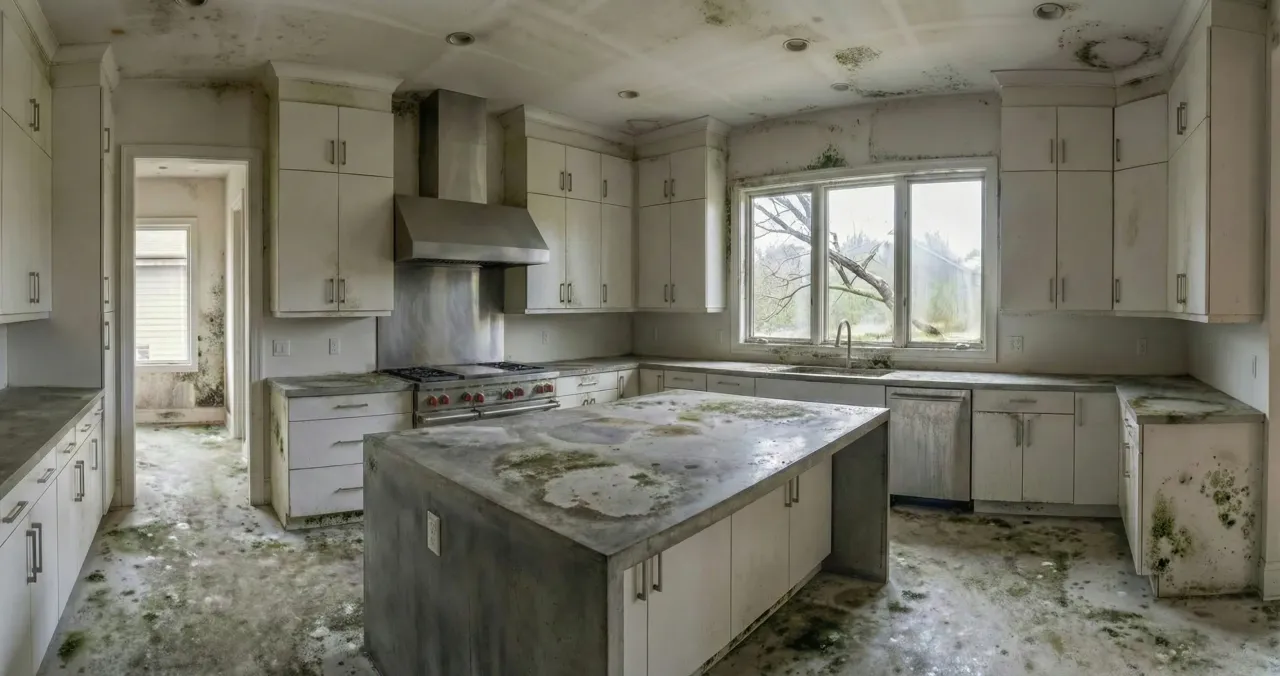
Growth found behind base cabinets after a slow supply leak. Nothing was visible from the room.
Drying versus remediation
If you are inside the window, the work is drying: air movers, dehumidification, monitored daily until materials hit a dry standard. Cheap, fast, minimal demolition.
Once there is growth, drying alone is not a fix. Dead mold is still an allergen, and the spores are still there. Remediation means containment with negative air pressure, HEPA filtration, controlled removal of affected porous materials, HEPA vacuuming and wipe-down of what stays, then clearance. Done properly, the room next door never knows the work happened.
Bleach on a moldy wall treats the color, not the cause. If the material is still wet, you have painted over a clock that is still running.
What not to do
- Do not sand, scrape or blow air across it. Disturbed colonies release spores, and a box fan will move them through the whole house.
- Do not seal it in. Paint and mold-blocking primer over a wet cavity buys weeks, then costs more.
- Do not skip finding the source. Remediation without a repaired leak is a scheduled repeat visit.
When testing is worth it
If you can see it and you know where the water came from, testing rarely changes the plan — remove it and fix the source. Testing earns its cost when there is a smell but no visible growth, when someone in the house has symptoms, when a real estate transaction or a landlord dispute needs an independent record, or when you want post-remediation clearance in writing.
We test, contain and remove, and we rebuild what comes out — drywall, trim, paint, flooring — so you are not chasing a second contractor to put the room back.
We will test, contain and tell you plainly what needs to come out.