
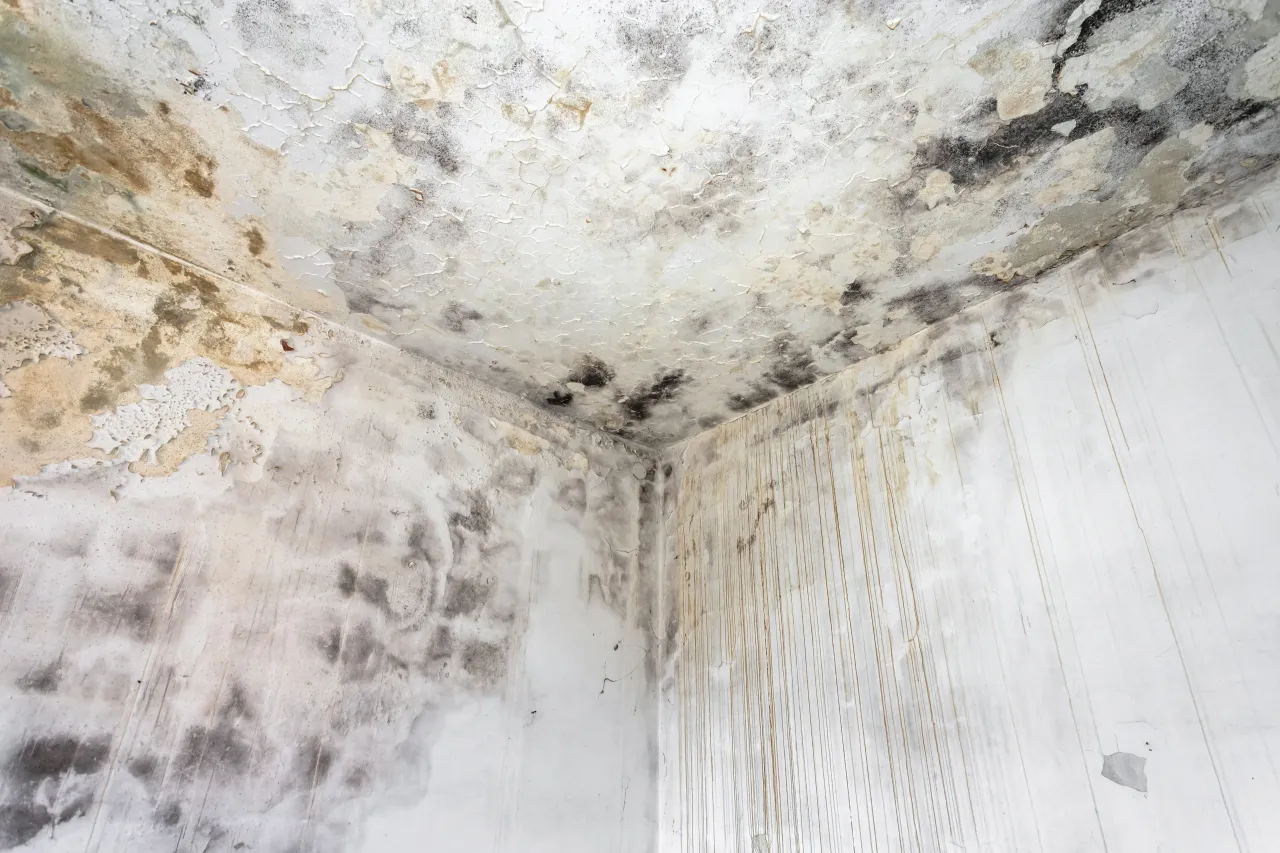
After a flood, two clocks start at once. The first is the material clock: how long drywall, framing, subfloor and insulation stay above a safe moisture content. The second is the biological clock: how long spores that are already in your house need water before they germinate. Everything about the cost and disruption of the job comes down to whether you stop the first clock before the second one finishes.
The real timeline
Wet, not growing
Materials absorb water and wick it upward. Nothing is growing yet. This is the window where drying alone solves the problem.
Germination begins
On wet cellulose at normal room temperature, spores begin to germinate. Still invisible, still odorless in most cases.
Colonies establish
Growth becomes established and detectable. Musty odor usually appears in this range. Porous materials start to become removal decisions.
Visible and spreading
Surface growth is obvious, spores are being released, and the job is now containment, removal and clearance rather than drying.
Those ranges shift with temperature, humidity and material. A 78-degree Michigan basement in August moves faster than a 60-degree crawlspace in April. Paper-faced drywall and carpet pad move faster than sealed concrete. But the shape of the curve does not change: the first two days are cheap, and every day after that costs more.
What actually decides whether mold starts
- Moisture. Wet material, or air held above roughly 60 percent relative humidity for a sustained period.
- A food source. Anything organic — drywall paper, framing, carpet backing, dust on a joist.
- Time. Take away the moisture inside the window and the other two never matter. That is the entire strategy.
Which is why we measure rather than look. Moisture meters in drywall, framing and subfloor tell you what is actually wet; thermal imaging shows where water traveled. A wall that looks dry and reads 28 percent is a wall that is growing mold.
The first 48 hours after a flood
Stop the source
Shut off the supply, the appliance or the pump circuit. Drying while water is still arriving is theater.
Extract, do not mop
Extraction removes water from carpet pad, from under cabinets and from the seams a mop never reaches. This is the single biggest lever on total drying time.
Open the assemblies that hold water
Baseboard, wet insulation and a controlled number of drill holes or flood cuts let trapped cavities dry instead of sitting wet behind intact paint.
Dry to a standard
Air movers plus dehumidification, monitored daily, until materials reach a dry standard — not until the room feels normal.
The mistakes that start mold
- Waiting for the adjuster. Policies generally expect you to prevent further damage. Documented emergency mitigation is the right move; a week of standing water is not.
- Household fans and open windows. On a humid Michigan day, opening windows adds moisture. Air movement without dehumidification just moves wet air around.
- Drying the surface and stopping. Carpet that feels dry on top with a saturated pad underneath is the most common repeat call we get.
- Putting it back too early. New baseboard and fresh paint over a wet cavity buys three weeks and doubles the eventual scope.
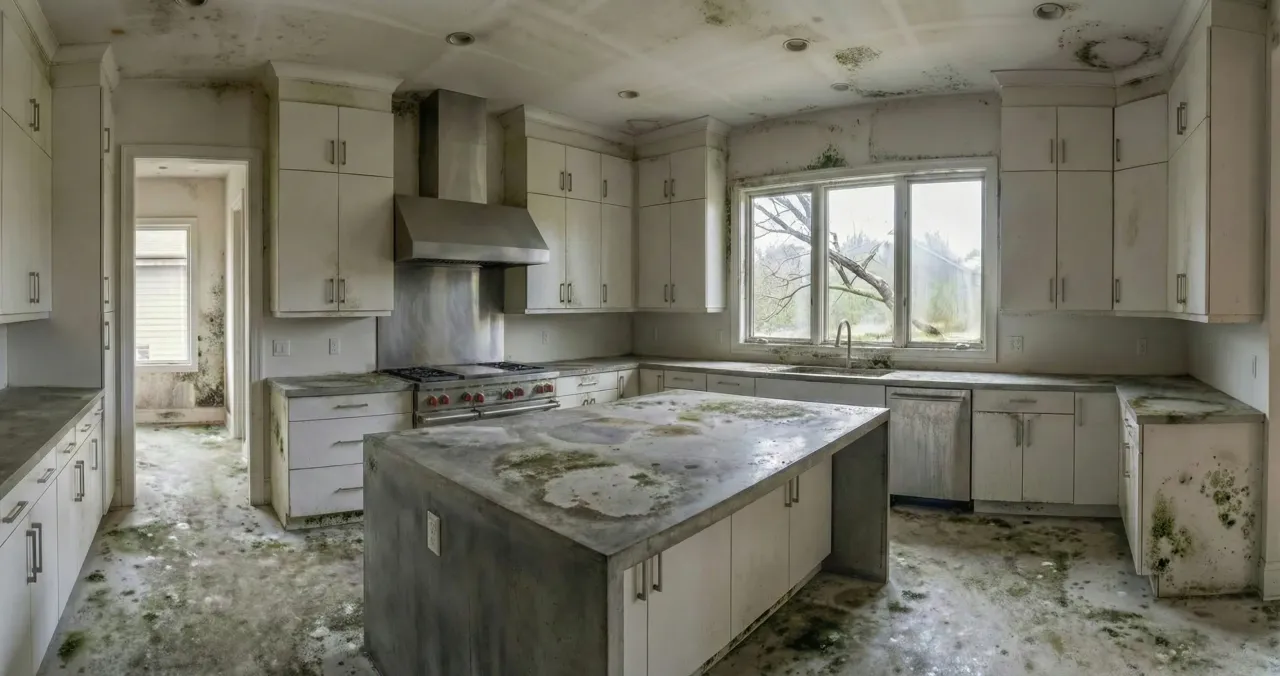
Found behind base cabinets weeks after a “dried” kitchen leak. Nothing was visible from the room.
Drying versus remediation
Inside the window, the work is drying: equipment, monitoring, minimal demolition, and a dry-standard sign-off. Once growth is established, drying alone is not a fix — dead mold is still an allergen and the spores are still in the material. Remediation means containment under negative air pressure, HEPA filtration, controlled removal of affected porous materials, HEPA vacuuming and wipe-down of what stays, and clearance at the end.
The difference between a three-day drying job and a three-week remediation is usually a decision somebody made on the first afternoon.
When testing is worth paying for
If you can see growth and you know where the water came from, testing rarely changes the plan: remove it and fix the source. Testing earns its cost when there is an odor but nothing visible, when someone in the house has symptoms, when a sale or a landlord dispute needs an independent record, or when you want post-remediation clearance in writing.
After a flood, what we hand you
Moisture readings from the first visit forward, photo documentation, daily drying logs, the equipment map and the scope of work. That record is what a claim runs on, and it is also how you know the structure actually reached dry rather than simply feeling dry. See what good damage documentation looks like for the detail.
Frequently asked questions
How quickly does mold grow after water damage?
Germination can begin in 24 to 48 hours on wet cellulose materials at normal room temperature. Established, detectable colonies usually take three to twelve days, and clearly visible growth around 18 to 21 days.
Can a flooded basement be saved without tearing out drywall?
Often, yes. If we get there early and the materials read within range, targeted cavity drying can save the wall. The decision comes from moisture readings, not a default rule.
Does bleach kill mold on drywall?
It treats the color and leaves the material wet and porous. On paper-faced drywall the growth returns. Remove the affected material, correct the moisture source, then rebuild.
Will my insurance cover mold after a water loss?
Many policies cover mold that results from a covered sudden water loss, up to a sub-limit, and exclude mold from long-term seepage. Prompt, documented mitigation is what keeps you on the right side of that line.
How long does professional drying take?
Most residential water losses dry in three to five days with equipment running continuously and monitored daily. Equipment comes out when the structure reads dry, not on a fixed schedule.
That is the window where drying beats remediation. We answer 24/7.