
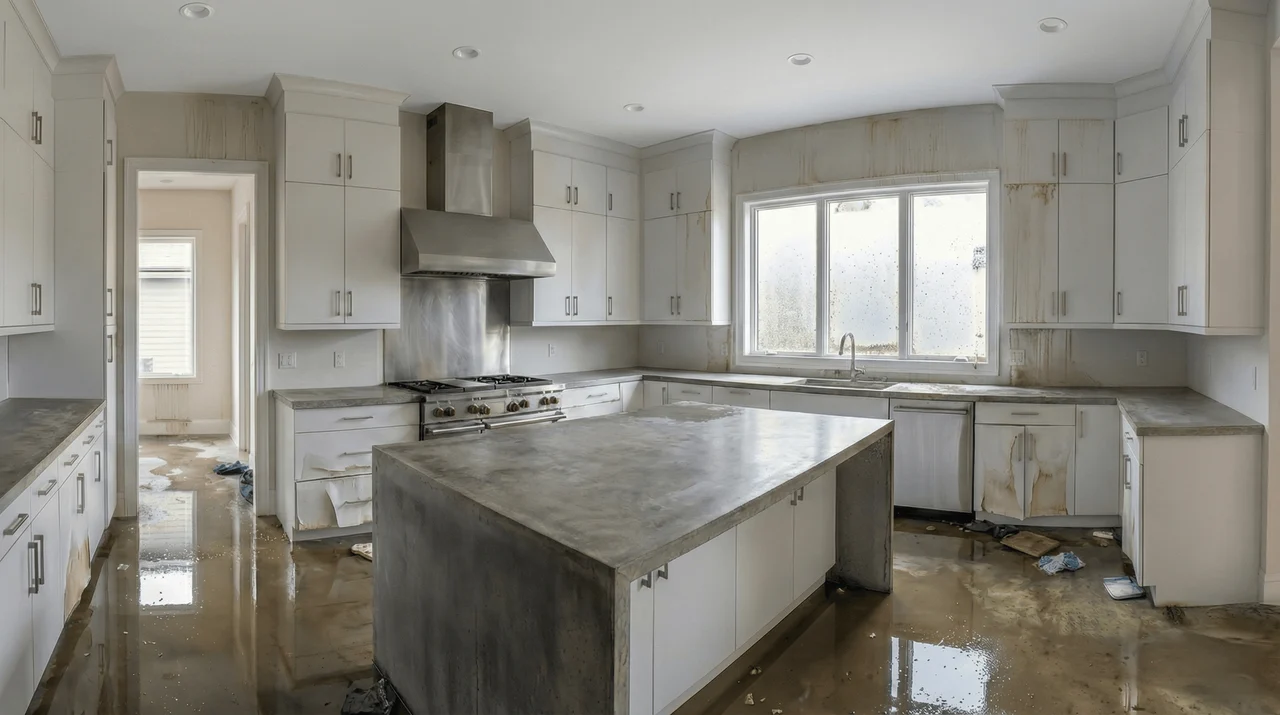
Here is the straight version: sewage is Category 3 water. It carries bacteria, viruses and parasites, it soaks into porous materials within minutes, and it should not be handled without containment, protective equipment and proper disposal. Shop vacs and bleach do not make a Category 3 loss safe.
What Category 3 water actually means
Restoration work sorts water into three categories. Category 1 is clean — a supply line, a water heater. Category 2 is grey — washing machine discharge, a dishwasher, a toilet overflow with no solids. Category 3 is grossly contaminated: sewage, a septic backup, a sewer main surcharge, floodwater from outside the building.
Category matters because it dictates what can be saved. In a Category 1 loss, most materials can be dried in place. In a Category 3 loss, affected porous materials — carpet, pad, drywall, insulation, particleboard, upholstered contents — come out, because they cannot be reliably disinfected once contaminated water has wicked into them.
- Clean water sitting in a warm building degrades to Category 2, then Category 3, as bacteria multiply.
- A Category 1 loss left for three days is not a Category 1 loss any more.
- Which is why same-day response is the difference between drying and demolition.
The health risks
Sewage can carry E. coli, salmonella, shigella, hepatitis A, rotavirus and parasites such as giardia and cryptosporidium. Exposure routes are ingestion, contact with broken skin, and aerosols — which is exactly what you create by spraying, scrubbing or blowing a fan across contaminated material.
- Do not run a household fan across it. Air movement aerosolizes contaminants and moves them through the house.
- Do not use a household vacuum or carpet cleaner. Neither contains what it picks up, and both become contaminated equipment.
- Keep children and pets out entirely. Including the rooms next to it, until containment is up.
- Do not use the plumbing. Every flush, sink and washing-machine cycle adds to the backup.
- Treat HVAC as a pathway. If supply or return openings are in the affected area, shut the system off rather than circulating that air.
What insurance usually covers
Most standard homeowner policies exclude water that backs up through sewers or drains unless you carry a water backup and sump overflow endorsement. That endorsement is inexpensive, common, and frequently capped — often somewhere between five and twenty-five thousand dollars. Separately, if a municipal main surcharged, the municipality may have its own claim process, usually with tight notice deadlines.
- Check the endorsement list on your declarations page rather than assuming.
- Photograph everything before anything moves, including the standing water and the affected contents.
- Keep a list of discarded items with approximate age and value.
- Note the date, time and, if the city was involved, when you reported it.
- Keep the moisture readings, drying logs and disposal records — that is the file the adjuster works from.
We document all of that from the first visit as a matter of course. See what good damage documentation looks like.
A sewage backup is a biohazard event that happens to involve water. Treating it as a plumbing mess is how it becomes a health problem.
What professional cleanup actually involves
Containment
The affected area is sealed off and put under negative air pressure with HEPA filtration, so nothing migrates to the rest of the building.
Extraction and removal
Contaminated water is extracted with equipment rated for it; affected porous materials and unsalvageable contents are bagged and disposed of as regulated waste.
Cleaning and disinfection
Hard surfaces and structural materials are cleaned, then treated with an appropriate antimicrobial — cleaning first, because disinfectant does not work through soil.
Structural drying
Air movers and dehumidification, monitored daily with meter readings, until materials reach a dry standard.
Verification and rebuild
Conditions confirmed, then drywall, flooring, trim and paint rebuilt by our own crews back to pre-loss condition.
Why it backed up in the first place
- Tree roots and collapsed clay laterals on older Genesee County properties.
- Heavy rain and snowmelt surcharging combined sewers faster than they can drain.
- Grease, wipes and paper narrowing the line over months until one flush finishes it.
- A failed ejector pump in a below-grade bathroom or laundry.
- No backwater valve on a basement fixture below the street main.
Cleanup without fixing the cause is a scheduled repeat. A camera inspection of the lateral, and a backwater valve where the layout warrants it, is the difference between an incident and an annual event.
When to call
Immediately, in practice. Any sewage inside the building, any water that has contacted a septic system, or any standing water you cannot confidently identify should be treated as Category 3 until proven otherwise. We answer 24/7 and are typically on site in two to four hours across Genesee County and Metro Detroit.
Frequently asked questions
Is sewage backup covered by homeowners insurance?
Usually only with a water backup and sump overflow endorsement, which most carriers sell separately and often cap. Check your declarations page, and if a municipal main was involved, ask about the city claim process and its deadline.
Can I clean up a small sewage backup myself?
A few square feet on a sealed concrete floor, with full protective equipment and immediate disposal, is arguably manageable. Anything touching carpet, drywall, insulation or subfloor is not: those materials cannot be reliably disinfected and need controlled removal.
Does everything have to be thrown away?
Not everything. Non-porous and semi-porous materials can usually be cleaned and disinfected. Porous materials that absorbed contaminated water — carpet and pad, drywall, insulation, particleboard, mattresses and upholstery — generally come out.
How long does sewage cleanup take?
Removal and disinfection is typically one to two days, and structural drying another three to five, monitored daily. Rebuild time depends on how much came out.
Will the smell go away?
Yes, when the source material is gone. Odor that persists after cleaning means contaminated material is still in place — behind drywall, under flooring or in the HVAC system — not that you need a stronger deodorizer.
Do not run fans, do not use the plumbing, and keep everyone out. Call us — we are on 24/7.