
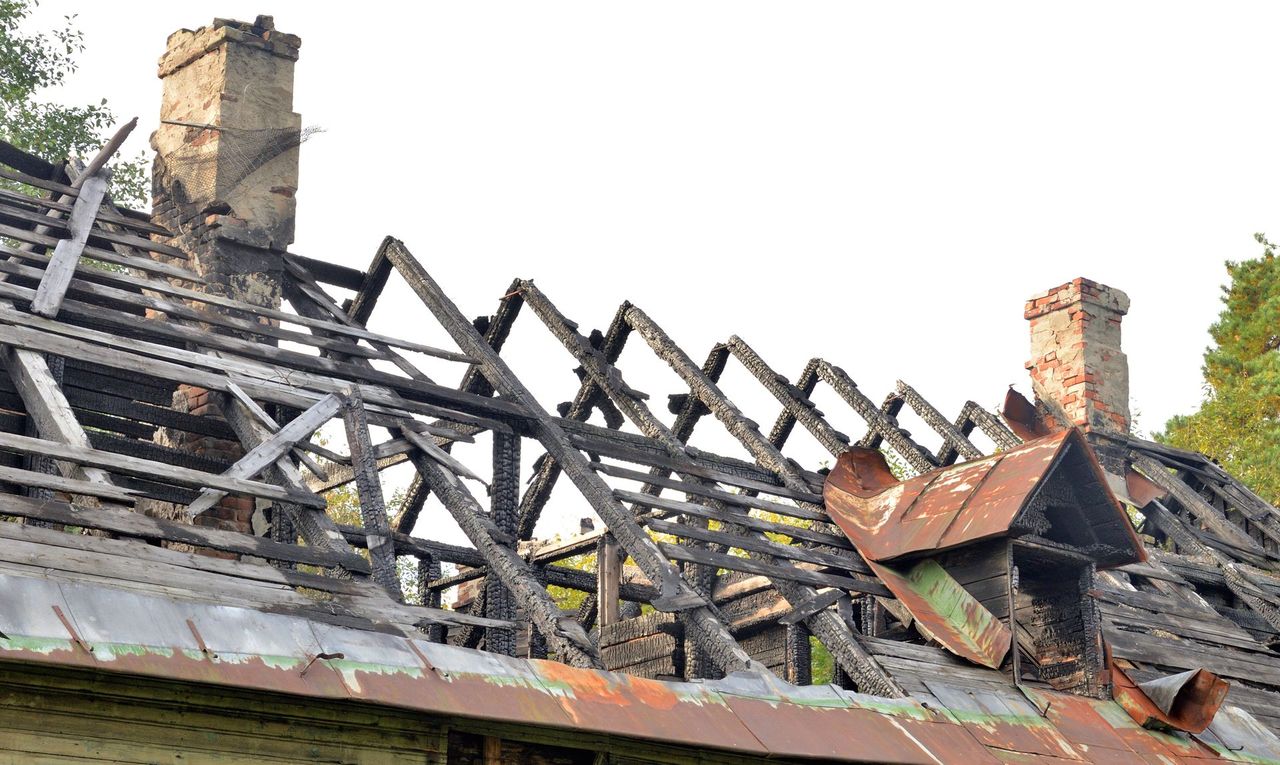
Homeowners are almost always surprised by the size of a fire restoration scope. The flame damage is obvious and contained: one wall, one appliance, one room. Then we start writing rooms that never saw fire into the estimate, and the reasonable question follows — why is the whole second floor on this list?
Because smoke is not exhaust. It is a pressurized aerosol of hot particles and acidic gas, and it goes everywhere the air in your house goes.
How smoke moves through a building
Hot smoke rises and pressurizes the upper part of the structure, then looks for the path of least resistance: stairwells, HVAC returns, plumbing chases, recessed light cans, the gap around a bath fan. Once it finds a cooler surface it deposits. That is why soot collects on the top of door casings, behind cold exterior walls, and in the closet you kept shut.
If the furnace or air handler was running during the fire, the duct system distributed smoke to every register in the house in minutes. That single fact often decides whether the scope is one floor or all of it.
- Dry smoke. Fast, hot fires. Powdery, easier to vacuum, but it drives deep into porous surfaces.
- Wet smoke. Smoldering, low-heat fires. Sticky, smeary, strong odor — the hardest to clean without spreading it.
- Protein residue. Kitchen fires. Nearly invisible, varnishes cabinets and walls in a thin amber film, and it smells for months.
- Synthetic soot. Burning plastics and electronics. Acidic and corrosive; the reason time matters.
Soot keeps working after the fire is out
Residue from modern household materials is acidic. Left on a surface in a humid house it etches and stains, and the damage becomes permanent on a predictable schedule: chrome and brass tarnish within hours, aluminum and grout discolor within days, and porous finishes — unsealed stone, natural wood, painted drywall — absorb odor deeper the longer they sit.
This is why emergency fire response is not just about tarping the roof. Pre-cleaning high-value surfaces in the first days is often the difference between cleaning a countertop and replacing one.
Fire damage is what the flame touched. Fire loss is what the smoke touched. The second number is always bigger.
Cleaning is not deodorizing
Removing visible soot and removing odor are two different jobs. Odor molecules embed in porous materials and re-release when the room warms up or the humidity climbs, which is why a house can look finished in July and smell like a fire again in August.
Real deodorization is sequential, and skipping steps is what produces the “we tried a company already” call we get months later.
Remove the source. Charred material, saturated insulation and unsalvageable porous contents come out of the building.
Clean every affected surface. HEPA vacuum, then the right chemistry for the residue type — dry sponge for dry soot, solvent for protein film. Wrong product, permanent smear.
Treat the air and the cavities. HEPA air scrubbing throughout, duct cleaning, and thermal or hydroxyl treatment where odor has embedded.
Seal, then refinish. Framing and subfloor get an odor-blocking sealer before new drywall goes on. Paint alone is not a seal.
What not to do while you wait
- Do not run the HVAC system. You will redistribute what has settled.
- Do not wipe soot with a wet cloth. Water turns dry soot into a stain that will not come out.
- Do not eat food or use toiletries that were exposed, sealed or not.
- Do not throw anything out before it is photographed and inventoried — contents are a claim line item.
We handle the whole arc: emergency board-up, soot and odor removal, contents cleaning, and the reconstruction that puts the rooms back the way they were. One crew, one scope, one point of contact with your adjuster.
The sooner soot is off the surfaces, the more of your house stays yours.