
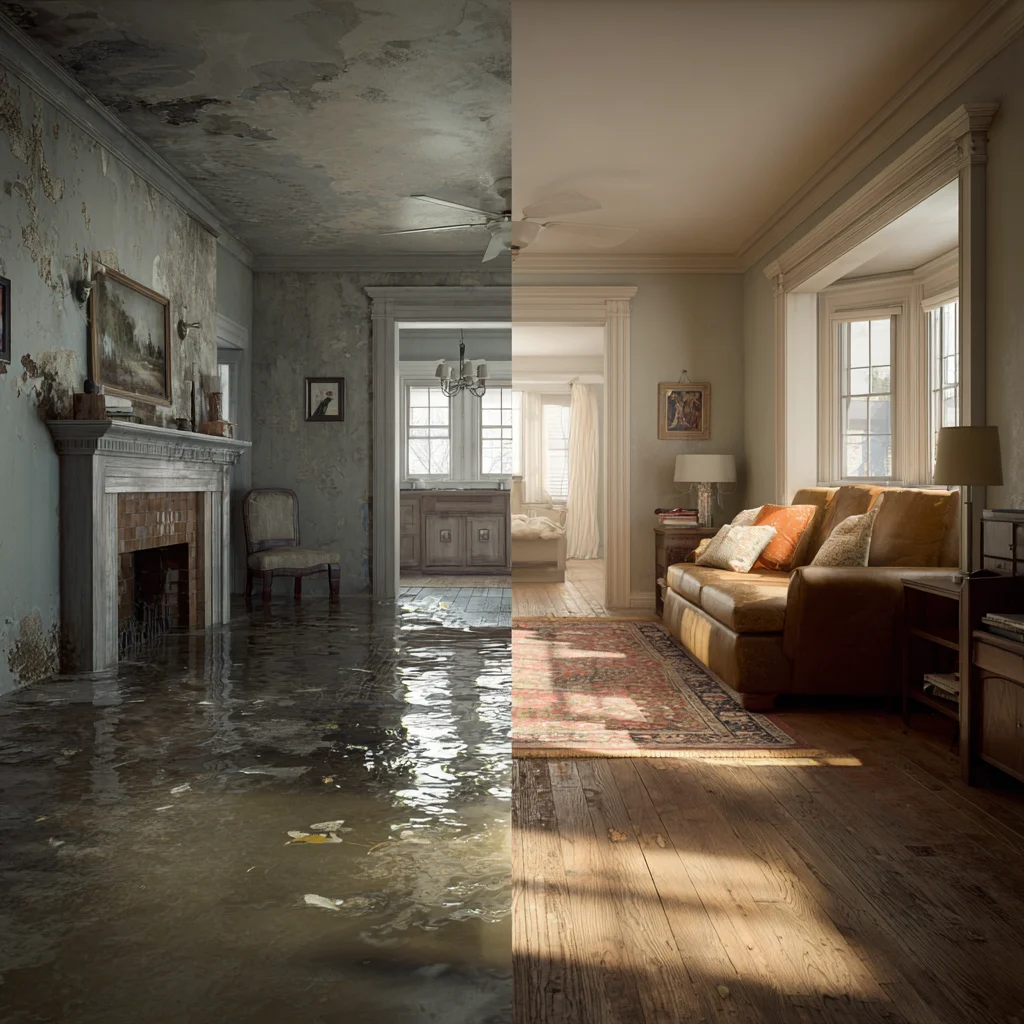
Snow melts, rain arrives on top of it, and water shows up along the basement walls or across the floor. If you live in or around Grand Blanc, the pattern repeats every year for the same handful of reasons, and most of them are fixable for far less than the cost of the second flood.
The quick answer
Spring flooding is a groundwater problem, not usually a plumbing one. Frozen ground cannot absorb meltwater, so it runs to the lowest available path — which is the gap between your foundation and the soil backfilled against it. Fix the water arriving at the wall, then fix the wall’s ability to shed it, then make sure the pump can keep up.
Why it happens here
Frozen ground and layered snowmelt
In March the top of the soil thaws while the layer beneath is still frozen. Meltwater has nowhere to go down, so it travels sideways. Add two inches of spring rain on saturated ground and the water table rises above your slab.
Grading that sends water to the house
Soil settles against a foundation over the years, and eventually the ground slopes toward the wall instead of away. You need roughly six inches of fall in the first ten feet. Most of the flooded basements we pump have less than that on at least one elevation.
Downspouts that discharge at the wall
A roof sheds hundreds of gallons in a single rain. A downspout dumping it at the corner of the foundation is the most concentrated water source your basement will ever face — and the cheapest to fix.
Foundation and cove-joint seepage
Hairline cracks in poured walls, mortar joints in block, and the cove joint where the wall meets the slab all leak under hydrostatic pressure. They often stay dry for months and only fail when the water table comes up.
Sump systems that cannot keep up
Spring is when an undersized, aged or unbacked-up pump is exposed. It is also when the power goes out. That combination is the single most common cause of the spring calls we take — see sump pump failure.
Window wells and hatchways
A well with no drain and a clogged gravel bed becomes a bucket outside a piece of glass. Snow piles in it all winter and melts in a day.
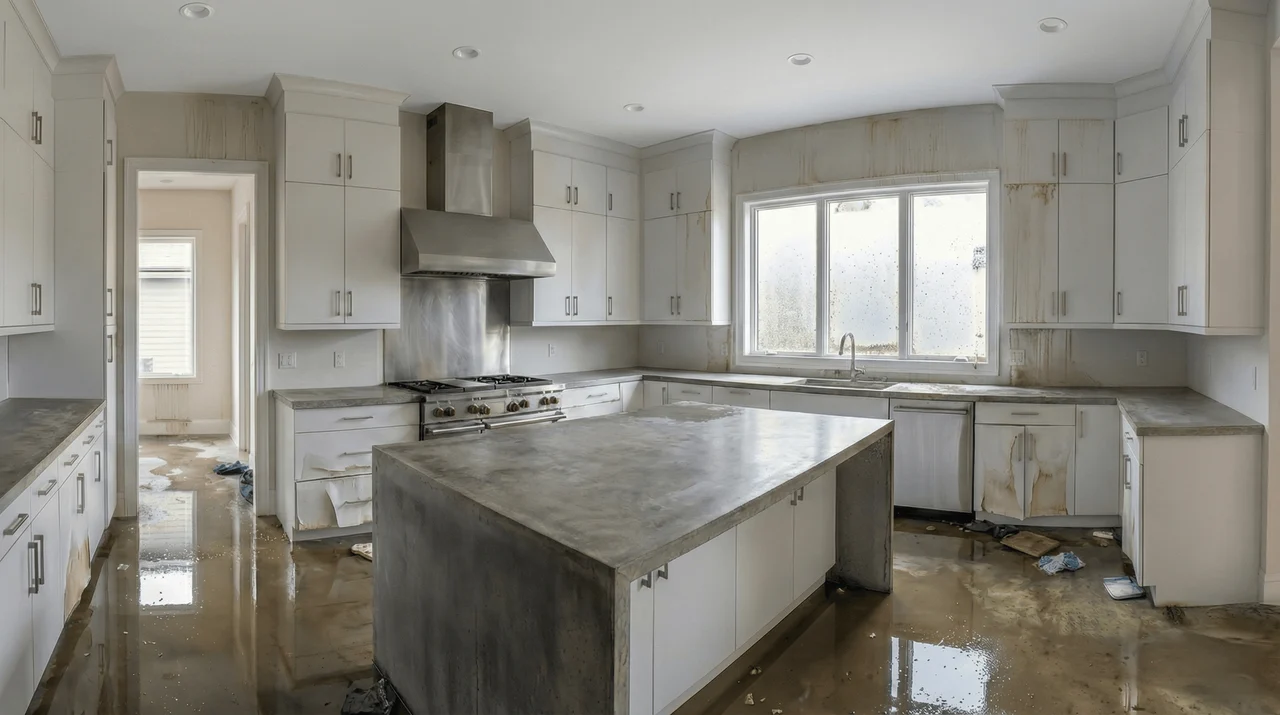
Two inches of water reaches drywall, baseboard, subfloor and carpet pad. Depth is not the measure of damage.
What to do while it is happening
Stay out of standing water
If it is near outlets, the furnace or the panel, kill those circuits at the breaker first.
Get contents up
Anything on the floor, off the floor. Boxes wick water upward fast.
Move water out
Shop vac or transfer pump to a floor drain or laundry sink, and check the sump discharge is actually flowing away from the house.
Photograph before anything moves
Wide room shots, the water line on the wall, the affected contents.
Call for extraction
Standing water does not need to be deep to soak drywall, baseboard, insulation and subfloor.
Fix the water that arrives at the wall before you spend money on the wall. Most spring floods are a gutter and a grade, not a foundation.
How to stop it, cheapest first
- Extend the downspouts. Six to ten feet from the foundation, discharging downhill. Highest-value fix on the list.
- Clean gutters before the thaw. An ice-blocked gutter overflows straight down the wall.
- Regrade the first ten feet. Build the soil up against the wall and slope it away. Compacted clay, not topsoil.
- Add window well covers and drains. Keep snow and runoff out of the well.
- Service and back up the sump. Test it, add a battery backup and a high-water alarm.
- Seal active cracks properly. Polyurethane or epoxy injection from the inside, not hydraulic cement smeared on the surface.
- Consider interior drain tile where seepage is chronic along the cove joint — the expensive option, and sometimes the right one.
Why drying it out is not the same as drying
A basement that looks dry after a wet-vac and a box fan is usually still wet where it counts: inside the wall cavity, under the carpet pad, in the insulation and in the bottom of the drywall. Mold can start on wet cellulose within 24 to 48 hours, which is why we take readings rather than judging by appearance, and why the equipment comes out on a number rather than a feeling.
If it has flooded more than once
Then this is a water-management problem, not bad luck. We are happy to look at the whole picture — where the water arrives, what it enters through, and whether the pump can handle a spring event — and tell you which fixes actually change the outcome. If it is wet right now, water damage mitigation comes first.
Frequently asked questions
Why does my basement only flood in spring?
Frozen subsoil cannot absorb meltwater, so it travels laterally to the backfill against your foundation. Add spring rain on saturated ground and the water table rises above the slab.
Does homeowners insurance cover spring basement flooding?
Groundwater and surface-water intrusion are typically excluded; sump or drain backup needs a specific endorsement. Sudden plumbing failures are usually covered. Check your declarations page rather than assuming.
What is the cheapest fix that actually works?
Downspout extensions and correcting the grade in the first ten feet. Together they eliminate most of the water that ever reaches the wall.
Do I need to tear out the drywall after a basement flood?
Not always. We read moisture in drywall, framing and subfloor first. Saturated carpet pad and base trim usually go; what can be dried in place gets dried in place.
How fast can Apex respond in Grand Blanc?
We are based in Grand Blanc, so most local calls are on site within two to four hours, 24/7.
We extract, dry to a documented standard and rebuild what comes out.