
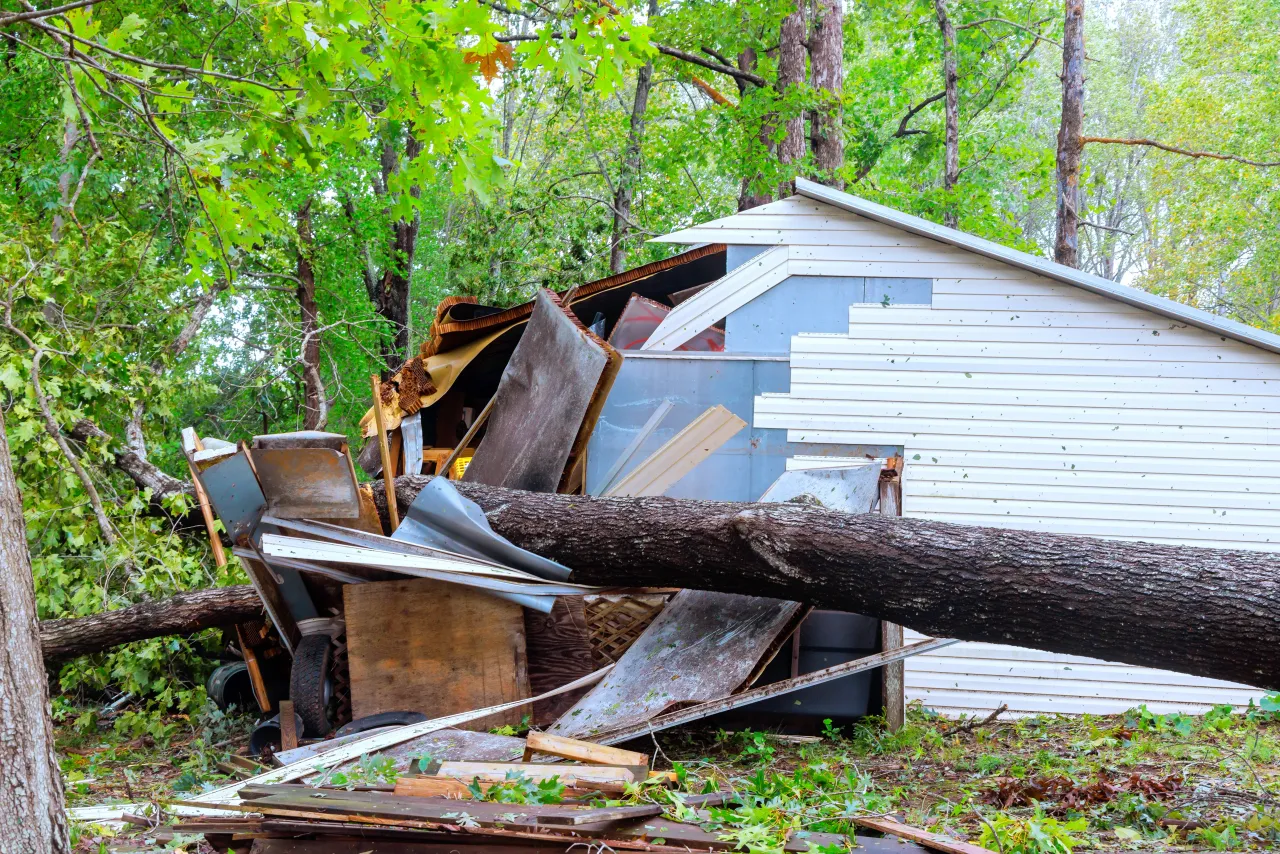
Storm losses are messier than a burst pipe because there are usually several damage paths at once — roof, windows, siding, groundwater — and because everyone in the county is calling their insurer the same morning. A clear damage map is what moves your claim out of that queue.
What should I do immediately after storm water damage?
Safety
Downed lines, gas smell, standing water near electrical, sagging ceilings. Leave if any of those are present and call the utility.
Stop the intrusion
Emergency tarping and board-up first. Drying a building that is still taking on water is wasted equipment.
Record before you clean
Photos and video of every affected room and elevation, wide then close, before anything moves.
Extract and dry
Standing water out, then air movers and dehumidification with daily moisture readings.
Report and document
Open the claim, note the adjuster’s name and the date, and keep every receipt from hour one.
How do I create a damage map for insurance?
A damage map is a simple, room-by-room record that ties each piece of damage to its cause and its date. Adjusters handling a hundred storm claims approve the ones they can follow.
- Sketch the floor plan. Label rooms and number them. A phone note is fine.
- One photo set per room. Four corners wide, then close-ups of each damaged element, with something in frame for scale.
- Mark the water path. Where it entered, where it traveled, how high it reached on each wall.
- Log moisture readings. Material, location, reading, date. This is the part homeowners never have and adjusters always want.
- Photograph the exterior cause. The missing shingles, the broken window, the tree, the overwhelmed window well.
- Inventory contents. Item, approximate age, approximate value, and a photo — before anything goes to the kerb.
- Timestamp it. Storm date, discovery date, mitigation start date.
We build this as a matter of course on every job and hand it over as one file — see what good damage documentation looks like.
Why fast drying saves the most money
Storm water is rarely clean. Roof and ground intrusion carries debris and soil, and water that sits in a warm building degrades from Category 1 toward Category 3 as bacteria multiply. Time changes what can be saved: a wall dried on day one is a wall; a wall wet on day four is a removal item, and mold can begin in wet cellulose within 24 to 48 hours.
- Extraction, not mopping — removing water from pad, cavities and seams is the biggest lever on total drying time.
- Controlled openings so trapped assemblies dry instead of sitting wet behind intact paint.
- Dehumidification, not open windows — on a humid Michigan day, open windows add moisture.
- Daily readings, and equipment out on a number rather than a schedule.
Adjusters do not reward urgency. They reward evidence. Produce both and the claim stops being an argument.
What insurance usually covers after a storm
- Usually covered: wind-driven rain entering through storm-created openings, fallen-tree impact, and the resulting interior water damage.
- Usually excluded: rising surface water and groundwater — that is flood insurance, typically through the NFIP with its own waiting period.
- Needs an endorsement: sewer or sump backup during heavy rain.
- Often disputed: pre-existing roof wear, deferred maintenance, and damage reported weeks later.
The mistakes that cost the most
- Cleaning up and discarding materials before photographing them.
- Waiting for the adjuster before starting mitigation — policies generally expect you to prevent further damage.
- Accepting a scope that covers the visible damage and ignores the cavity moisture behind it.
- Hiring a storm-chasing crew with an out-of-state phone number and no local license.
- Signing an assignment of benefits without reading what it hands over.
What we do
Tarping and board-up the same day, extraction and drying with documented readings, then reconstruction — roof, siding, drywall, flooring, paint — by our own crews. One scope, one point of contact, and a file your adjuster can follow. See storm damage restoration, or the first four things to do once the line passes.
Frequently asked questions
What should I do first after storm water damage?
Check for safety hazards, stop the water coming in with tarping or board-up, photograph everything before you clean, then start extraction and drying. Report the claim the same day.
Is storm water damage covered by homeowners insurance?
Wind-driven rain through a storm-created opening usually is. Rising surface water and groundwater usually are not — that requires flood insurance. Sump and sewer backup needs its own endorsement.
How long does storm water drying take?
Typically three to five days of continuous equipment with daily monitoring, longer where water sat or where hardwood and plaster are involved.
Should I wait for the adjuster before drying?
No. Emergency mitigation to prevent further damage is expected under most policies. Document thoroughly and keep receipts, but do not let the building sit wet.
Do I need a separate roofer and restoration company?
Not with us. We tarp, dry, and rebuild roof, siding and interiors with our own crews, so nothing gets lost in the handoff.
We tarp, extract, dry and build the file your adjuster needs. 24/7.